


As an occupational therapist or occupational therapy assistant, you have skills that are needed across a variety of locations and facilities. Travel occupational therapy jobs are available throughout the United States, and licensing processes are becoming more streamlined for occupational therapists and assistants interested in travel.
Read on to learn more about the benefits of travel occupational therapy, updates regarding the multi-state licensure process, and what types of opportunities are available to occupational therapists and occupational therapy assistants.
Why Travel as an Occupational Therapist?
Occupational therapy is a fulfilling and well-compensated career path that offers flexibility for travel positions and temporary contract work. Some therapists enjoy a temporary change in location or an experience of working with a different population or setting. At other times, a travel opportunity can be a beneficial step toward career advancement or achieving one’s earning potential.
Here are a few of the top reasons occupational therapy is an increasingly dependable career choice:
High Compensation
Occupational therapy positions pay a median salary of $94,375 per year nationwidewith the top 2% making as much as $142,000 a year. This salary range varies based on location, facility type, position type, and years of experience. But the average wage is dependable with opportunities to grow, and travel positions can be a great way to increase earning potential.
Growing Demand
The growth rate of occupational therapy positions is projected to be 11 percent from 2023 to 2033, which is higher than the 4 percent average growth rate across all occupations. With an aging population and a stronger focus on preventative care, occupational therapists are in high demand.
Advanced Certification
Specializing in a particular area of occupational therapy is an effective way to increase expertise and compensation. Through the AOTA Advanced Certification Program, opportunities are available to receive specialized certifications in gerontology, pediatrics, or physical rehabilitation. Travel opportunities offer a valuable path to gain the right experience for advanced certifications, increase professional experience, and enhance recognition.
These career benefits are just a few of the many reasons that travel OT positions can be a beneficial career choice for occupational therapists and occupational therapy assistants. The personal benefits of travel positions are also appealing — new experiences, different areas to explore, and a temporary change to help avoid burnout are some of the appealing personal reasons to take on a travel opportunity.
Where Do Travel Occupational Therapists Work?
There is a wide variety of populations and facility types that need occupational therapists and occupational therapy assistants. Travel positions can be a great way to become familiar with different patient populations or types of healthcare facilities, which can help therapists specialize more confidently. With hands-on experience, therapists and assistants can better know where they are a good fit and what type of positions to pursue.
Here are a few of the populations and settings that occupational therapists and assistants are typically working with:
Adult Patient Settings
If occupational therapists or assistants prefer working with adults, multiple healthcare settings focus on that patient population. This typically involves working with adults who are navigating an illness, disability, or recovery. Some of the settings with primarily adult patients include:
- Acute care
- Acute inpatient rehab
- Skilled nursing facilities
- Home health
- Workplace ergonomics
- Hand therapy
- Neuro outpatient therapy
- Academia and research
- Mental health
- Teletherapy
Pediatric Patient Settings
There are also various settings available for occupational therapists and assistants to work primarily with pediatric patients. This typically involves helping children with injuries, disorders, disabilities, or any other condition that requires help with engaging in day-to-day tasks. This often involves working directly with the patient’s family as well. Some pediatric occupational therapy settings include:
- Acute care
- School systems
- Hospitals
- Outpatient pediatrics
- Early intervention
- Clinics
- Home health
- Mental health
- Teletherapy
Apart from these adult and pediatric healthcare facilities, many occupational therapists and assistants work in a setting that provides care to all ages. Some of these settings may be community-based, such as homeless shelters, correctional facilities, or nonprofit organizations. Other opportunities are available in corporate settings or workplace wellness programs. Travel positions are an excellent way for occupational therapists and assistants to temporarily try working with a specific population or in a new setting, and see if that is something they would enjoy specializing in.
How Does Multi-State Licensing Work?
Therapists are often interested in travel opportunities but unsure about how licensing works when crossing state boundaries. Fortunately, there are processes in place to facilitate smooth job transfers across states and facilities. For occupational therapy specifically, the Occupational Therapy Licensure Compact, also known as the OT Compact, is just starting implementation.
What is the OT Compact?
The OT Compact is a licensure agreement between states that facilitates the transfer of occupational therapy credentials. Under the OT Compact, occupational therapists and occupational therapy assistants can more easily practice in other Compact states once they’ve obtained privileges. This is similar to the Nurse Licensure Compact that nurses currently use for travel positions and temporary contract work across state lines.
When Will the OT Compact Begin?
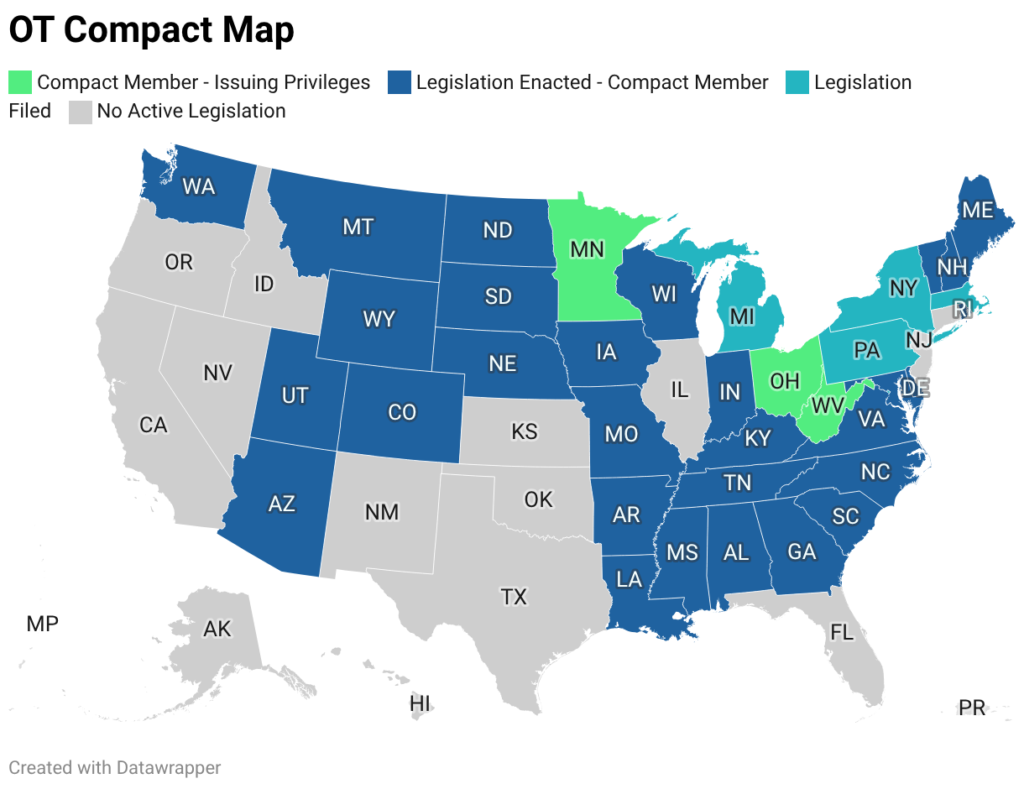
According to the American Occupational Therapy Association’s latest announcement, Ohio, Minnesota, and West Virginia are the first three states to have completed the integration process in 2026. 29 other states have passed legislation to join the Compact, but the process for actually applying and receiving Compact privileges is still under development.
Benefits of the OT Compact
An interstate licensing compact streamlines processes, benefiting both providers and patients. Some of the particular benefits of the OT Compact include:
- Streamlined licensing privileges across state lines
- Increased patient access to occupational therapy services
- Employment opportunities for military families or travel therapists
- Increased access to telehealth services
- Improved continuity of care
- Enhanced professional practices across states
Travel Occupational Therapy Jobs with SHC
If you’re looking for a short-term contract or travel opportunity in occupational therapy, let Supplemental Health Care help you find the right fit! A travel position can help grow your career while increasing professional and personal fulfillment.
Check out the SHC job portal to find a travel OT or assistant position available now. If you need help with any part of the job search or relocation process, reach out to a member of our recruiting team today!
People Also Ask:
What are the main benefits of pursuing travel occupational therapy positions?
Travel occupational therapy offers several key benefits including high compensation with median salaries of $94,375 per year, growing demand with an 11% projected growth rate from 2023 to 2033, and opportunities for advanced certification through the AOTA Advanced Certification Program. Travel positions also provide valuable experience working with different populations and settings, which can help therapists specialize more confidently and increase their earning potential.
What types of healthcare settings are available for travel occupational therapists?
Travel occupational therapists can work in diverse settings serving both adult and pediatric populations. Adult patient settings include acute care, acute inpatient rehab, skilled nursing facilities, home health, workplace ergonomics, hand therapy, neuro outpatient therapy, and mental health facilities. Pediatric settings encompass acute care, school systems, hospitals, outpatient pediatrics, early intervention programs, clinics, and home health services.
How does the OT Compact help occupational therapists work across state lines?
The Occupational Therapy Licensure Compact (OT Compact) is a licensure agreement between states that facilitates the transfer of occupational therapy credentials, making it easier for therapists to practice in other Compact states. Similar to the Nurse Licensure Compact, it streamlines licensing privileges across state lines, increases patient access to services, and provides enhanced employment opportunities for military families and travel therapists.
Which states are currently participating in the OT Compact in 2026?
As of 2026, Ohio, Minnesota, and West Virginia are the first three states to complete the integration process and begin issuing OT Compact privileges. While 29 other states have passed legislation to join the Compact, the process for applying and receiving Compact privileges in these additional states is still under development.
What is the projected job growth for occupational therapy positions?
The growth rate for occupational therapy positions is projected to be 11 percent from 2023 to 2033, which is significantly higher than the 4 percent average growth rate across all occupations. This strong growth is driven by an aging population and increased focus on preventative care, creating high demand for occupational therapists nationwide.
search content